
E Tapsoba, AB Sawadogo, DSR Kabore, NAB Ouedraogo, A Ouangre, M Soulama
30-Sep-2026
Introduction : Femoral neck fracture is a common condition among older adults, and timely surgi-cal management may be compromised by socioeconomic, organizational, and treatment-related factors. This study aimed to identify factors associated with delayed surgical management and to assess its impact on postoperative complications and functional outcomes. Methodology: This was a retrospective, observational, analytical study conducted at the Regional Hospital of Ziniaré, Burkina Faso, from January 1, 2021, to December 31, 2025. Patients aged ≥60 years who underwent hemiarthroplasty for femoral neck fracture were included. Surgical delay was defined as an interval of >48 hours between hospital admission and surgery. Factors associ-ated with delayed surgery were investigated using Firth’s penalized logistic regression. Functional outcomes were assessed using the Postel-Merle d’Aubigné (PMA) score. Results : A total of 78 patients were included, including 44 men (56.4%), with a mean age of 68.3 ± 11.8 years. Thirteen patients (16.7%) underwent surgery within 48 hours, whereas 65 (83.3%) underwent surgery after 48 hours. In multivariable analysis, financial difficulties (adjusted odds ratio [aOR] = 57.60; 95% confidence interval [CI]: 1.30–2557.06; p = 0.036) and prior use of tradi-tional treatment (aOR = 24.17; 95% CI: 1.31–446.69; p = 0.032) were independently associated with delayed surgery. Implant stock-out showed a trend toward an association (aOR = 15.23; 95% CI: 0.80–291.58; p = 0.071). At least one postoperative complication occurred in 24 patients (30.8%), with frequencies of 15.4% among patients undergoing surgery within 48 hours and 33.8% among those undergoing surgery after 48 hours. After adjustment, this association did not reach statistical significance (aOR = 20.39; 95% CI: 0.70–591.07; p = 0.079). In contrast, delayed sur-gery was independently associated with a non-excellent functional outcome according to the PMA score (aOR = 27.10; 95% CI: 1.08–679.56; p = 0.045). Conclusion : Delayed surgical management was common. Financial difficulties and prior use of traditional treatment were the main factors associated with delayed surgery. Addressing these barriers may facilitate earlier surgical management and potentially improve functional outcomes.
Femoral Neck Fracture; Surgical Delay; Postoperative Complications; Functional Out-Come
Introduction : La fracture du col fémoral constitue une pathologie fréquente chez le sujet âgé, dont la prise en charge chirurgicale précoce peut être compromise par des facteurs socioéconomiques, organisationnels et thérapeutiques. Cette étude avait pour objectif d’identifier les facteurs associés au retard de prise en charge chirurgicale et d’en évaluer l’impact sur les complications postopératoires et le devenir fonctionnel.
Méthodologie : Il s’agissait d’une étude rétrospective, observationnelle et analytique réalisée au CHR de Ziniaré, du 1er janvier 2021 au 31 décembre 2025. Étaient inclus les patients âgés de ≥ 60 ans, traités par hémiarthroplastie pour fracture du col fémoral. Le retard chirurgical était défini par un délai entre l’admission et l’intervention >48 heures. Les facteurs associés ont été recherchés par régression logistique pénalisée de Firth. Le devenir fonctionnel était évalué par les scores fonctionnel de Postel-Merle d’Aubigné (PMA).
Résultats : Soixante-dix-huit patients ont été inclus, dont 44 hommes (56,4 %), avec un âge moyen de 68,3 ± 11,8 ans. Treize patients (16,7 %) ont été opérés dans les 48 heures et 65 (83,3 %) après 48 heures. En analyse multivariée, les difficultés financières (ORa = 57,60 ; IC95 % : 1,30–2557,06 ; p = 0,036) et le recours préalable au traitement traditionnel (ORa = 24,17 ; IC95 % : 1,31–446,69 ; p = 0,032) étaient indépendamment associés au retard. La rupture de stock des implants présentait une tendance à l’association (ORa = 15,23 ; IC95 % : 0,80–291,58 ; p = 0,071). Au moins une complication postopératoire est survenue chez 24 patients (30,8 %), avec une fréquence de 15,4 % contre 33,8 % selon que la chirurgie était réalisée dans ou après les 48 heures. Après ajustement, cette association n’atteignait pas le seuil de significativité statistique (ORa = 20,39 ; IC95 % : 0,70–591,07 ; p = 0,079). En revanche, il était indépendamment associé à un résultat fonctionnel non excellent selon le PMA (ORa = 27,10 ; IC95 % : 1,08–679,56 ; p = 0,045).
Conclusion : Le retard de prise en charge chirurgicale était fréquent. Les difficultés financières et le recours préalable au traitement traditionnel constituaient les principaux facteurs associés. La réduction de ces obstacles pourrait favoriser une prise en charge plus précoce et améliorer le devenir fonctionnel des patients.
Mots-clés : Fracture du col fémoral ; Retard chirurgical ; Complications postopératoires ; Résultat fonctionnel.
Femoral neck fractures remain a major public health problem because of their increasing frequency, particularly among older adults. They are a major cause of loss of independence and functional dependence [1,2].
These fractures are frequently treated with hemiarthroplasty, which permits early mobilization and reduces the risks of non-union and femoral head necrosis [2,3].
Beyond treatment selection, time to surgery is an important prognostic factor. International guidelines recommend surgery on the day of or the day after admission [2]. Delayed surgery has been associated with higher mortality, more medical and surgical complications, longer hospital stays and poorer functional recovery [1,4].
In resource-limited countries, these targets are difficult to meet. Patient financial constraints, implant shortages, limited operating-room access, delayed preoperative assessment, supply shortages and organizational weaknesses frequently postpone surgery [5,6]. Delayed presentation, initial use of traditional treatment and geographical barriers may further prolong care pathways [5,7].
Data on the determinants of delay among patients undergoing hemiarthroplasty for femoral neck fracture remain limited in sub-Saharan Africa. This study identified factors associated with delayed surgery and assessed its relationship with postoperative complications and functional outcomes.
We conducted a retrospective observational analytical study in the Orthopaedic and Trauma Surgery Department of Ziniaré Regional Hospital, Burkina Faso, from 1 January 2021 to 31 December 2025.
Patients aged 60 years or older who underwent hip hemiarthroplasty for femoral neck fracture were included. Records that did not permit determination of time to surgery or the principal outcomes were excluded.
The principal exposure was the interval between admission and surgery. Surgical delay was defined as more than 48 hours. This hospital interval did not include the prehospital period between fracture and arrival.
Variables included sociodemographic characteristics, comorbidities, anaemia, financial difficulties, prior traditional treatment, implant shortages, operating-room constraints and preoperative Parker score.
Primary outcomes were at least one postoperative adverse event during hospitalization or within 30 days and functional status measured at six months using the 18-point Postel–Merle d’Aubigné (PMA) score [8]. Outcomes were excellent (18), very good (15–17), good (12–14) or fair/poor (<12). For multivariable analysis, outcomes were dichotomized as excellent versus non-excellent.
Data were analysed in Stata 17. Qualitative variables were summarized as counts and percentages and quantitative variables as mean ± standard deviation or according to distribution.
Factors associated with delay were assessed using Firth penalized logistic regression because of the small sample and sparse cells. Associations were expressed as odds ratios with 95% confidence intervals. Statistical significance was set at p < 0.05. Models assessing complications and functional outcomes were adjusted for age, sex, anaemia, diabetes, hypertension and preoperative Parker score. Potential consequences of delay were not entered into these models.
The study used anonymized medical records exclusively for scientific purposes. Institutional authorization was obtained before data collection.
Seventy-eight patients were included. Mean age was 68.3 ± 11.8 years and 44 (56.4%) were men. Thirteen (16.7%) underwent surgery within 48 hours and 65 (83.3%) after 48 hours. Mean age was 62.8 ± 11.5 years in the ≤48-hour group and 69.4 ± 11.4 years in the >48-hour group.
Factors associated with surgical delay
In Firth penalized regression, financial difficulties (aOR 57.60; 95% CI 1.30–2557.06; p=0.036) and prior traditional treatment (aOR 24.17; 95% CI 1.31– 446.69; p=0.032) were independently associated with delay. Implant shortage showed a trend toward association (aOR 15.23; 95% CI 0.80–291.58; p=0.071). Age, anaemia and preoperative functional status were not independently associated with delay. Surgical delay and postoperative complications
At least one postoperative complication occurred in 24 patients (30.8%). Complications occurred in 15.4% of patients treated within 48 hours and 33.8% treated after 48 hours. After adjustment, the association did not reach statistical significance (aOR 20.39; 95% CI 0.70–591.07; p=0.079). Age was independently associated with complications (aOR 1.90 per 10 years; 95% CI 1.05–3.42; p=0.033).
Surgical delay and functional outcome
All patients treated within 48 hours had an excellent overall PMA result, compared with 47.7% in the >48- hour group (p=0.021). Delay was independently associated with a non-excellent PMA result (aOR 27.10; 95% CI 1.08–679.56; p=0.045). Age was also independently associated with a non-excellent outcome (aOR 3.63 per 10 years; 95% CI 1.80–7.33; p<0.001).
Table I: General characteristics of the study population
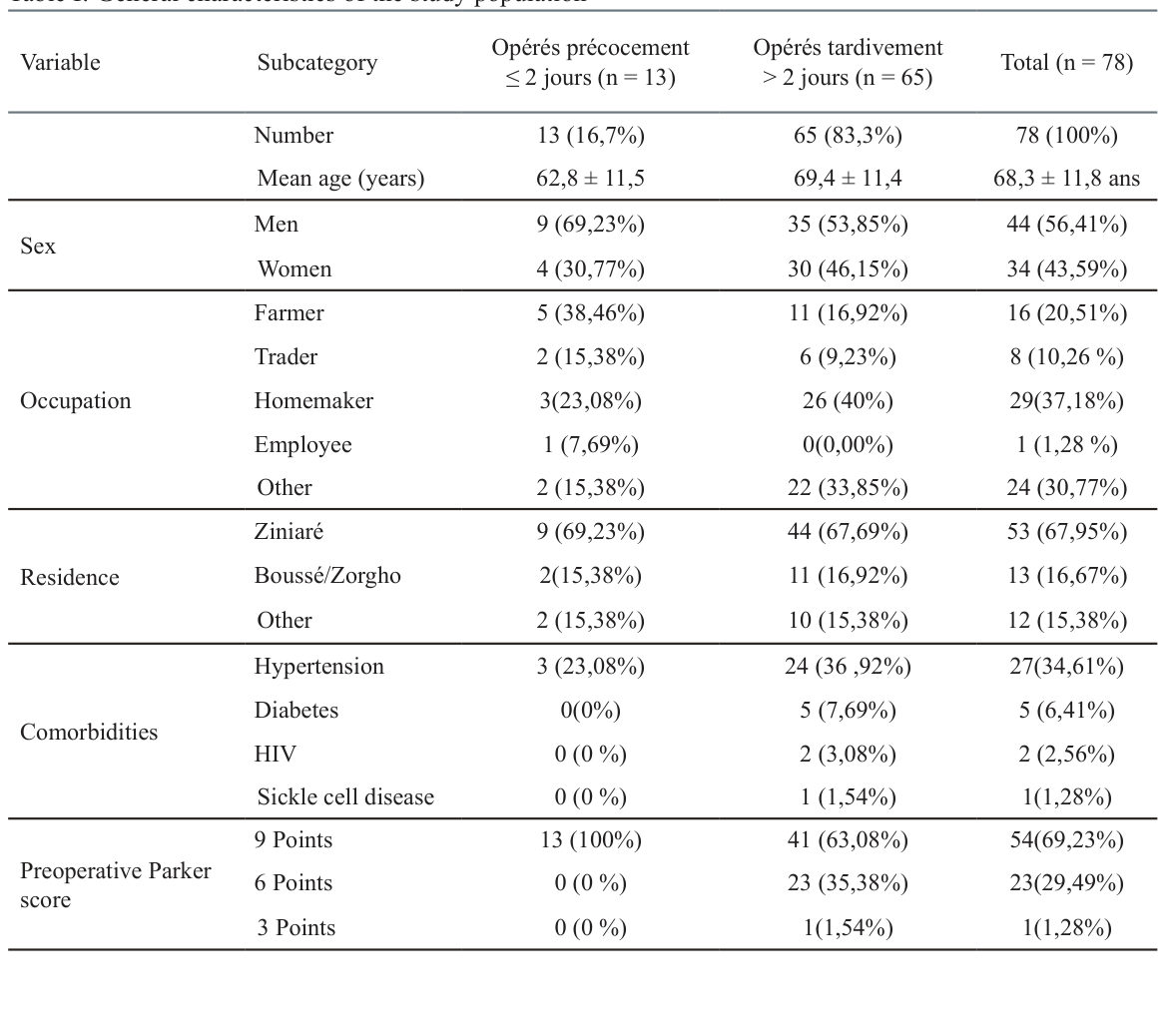
Table II: Factors associated with delayed surgery: Firth multivariable analysis

Table III: Delayed surgery and postoperative complications: Firth multivariable analysis

Table IV: Factors associated with a non-excellent PMA outcome: Firth multivariable analysis

Principal findings
In this series of 78 patients aged 60 years or older, 83.3% underwent surgery more than 48 hours after admission. In the INORMUS study of 4,486 patients aged at least 50 years across 24 low- and middleincome countries, only 23.4% of operated patients underwent fixation within 72 hours of fracture; the proportion was 16.1% in Africa [5]. A recent sub- Saharan African review attributed delays to patient and health-system factors, including late arrival, financial barriers, implant shortages, limited operating capacity and unequal access to specialist care [7]. Our findings confirm this multifactorial pattern.
Financial barriers
Financial difficulties were strongly associated with delay, although the very wide confidence interval reflects substantial imprecision. Hip fracture care generates costs for admission, investigations, medication, implants, surgery, transport and rehabilitation. Better financial protection may shorten delays, but further studies should identify the expenses most responsible for postponement.
Traditional treatment
Prior traditional treatment was independently associated with delay. Use of traditional bone setters is well documented in sub-Saharan Africa [9,10], including Burkina Faso [11]. Patients may exhaust financial resources before reaching hospital or arrive with complications such as pressure ulcers that require treatment before surgery. Improving early referral is more appropriate than framing traditional and hospital care as opposing systems.
Implant availability
Implant shortage showed a clinically plausible trend toward association but did not reach statistical significance. Hemiarthroplasty requires a suitable implant, instruments and operating resources. Reliable implant supply should be considered within delay-reduction strategies [7].
Postoperative complications
Complications occurred in 33.8% of delayed cases versus 15.4% after surgery within 48 hours. The adjusted association was not statistically significant and was imprecise; it should be interpreted as a trend rather than proof of an independent effect. This direction is nevertheless consistent with international literature [4,12].
Functional outcome
Delay was independently associated with a non-excellent PMA score, and age also predicted poorer function. Wide confidence intervals require caution, but prolonged preoperative immobility may contribute to impaired recovery. Regional evidence also identifies delayed care and limited rehabilitation as contributors to functional limitations [7].
Implications for care
Reducing delay requires earlier referral, fewer financial barriers, reliable implant availability and operating-room prioritization for femoral neck fractures. Engagement with patients, families and traditional practitioners may facilitate timely referral [11].
Strengths and limitations
This study documents determinants and outcomes of delayed hemiarthroplasty at a regional hospital and appropriately uses Firth regression for sparse data. Its retrospective single-centre design, small sample and limited number of events reduce generalizability and produced very wide confidence intervals.
Surgical delay beyond 48 hours was common and was primarily associated with financial difficulties and prior traditional treatment. Delay was associated with a non-excellent PMA score, while postoperative complications showed a non-significant increasing trend after adjustment. Reducing financial and organizational barriers may facilitate earlier treatment. Prospective multicentre studies are needed to confirm these associations.
*Correspondence :
Emmanuel TAPSOBA
sobaemmabf@gmail.com
Available online : September 30, 2026
1 : Surgery Department, Ziniaré Regional Hospital, Burkina Faso 2 : Surgery Department, Paul VI Hospital, Burkina Faso 3 : Surgery Department, Kaya Regional Hospital, Burkina Faso 4 : Orthopaedic and Trauma Surgery Department, Ouahigouya Regional University Hospital 5 : Lédéa Bernard Ouédraogo University 6 : Orthopaedic and Trauma Surgery Department, Sourô Sanou University Hospital, Bobo-Dioulasso 7 : Nazi Boni University
© Journal of african clinical cases and reviews 2026
Conflict of interest : None
[1] Lewis PM, Waddell JP. When is the ideal time to operate on a patient with a fracture of the hip? A review of the available literature. Bone Joint J. 2016;98-B:1573-81. doi:10.1302/0301- 620X.98B12.BJJ-2016-0362.R2.
[2] Ong T, Vindlacheruvu M. A commentary update on NICE CG124. Hip fracture: management (2023). Age Ageing. 2023;52:afad110. doi:10.1093/ ageing/afad110.
[3] American Academy of Orthopaedic Surgeons. Management of hip fractures in older adults: evidence-based clinical practice guideline. Rosemont (IL): American Academy of Orthopaedic Surgeons; 2021.
[4] Simunovic N, Devereaux PJ, Sprague S, Guyatt GH, Schemitsch E, DeBeer J, et al. Effect of early surgery after hip fracture on mortality and complications: systematic review and meta-analysis. CMAJ. 2010;182:1609-16.
[5] Armstrong E, Rogers K, Li CS, Jagnoor J, Moroz P, Oguzie GC, et al. Time from injury to hip-fracture surgery in low-income and middleincome regions: a secondary analysis of data from the International Orthopaedic Multicentre Study in Fracture Care (INORMUS). Lancet Healthy Longev. 2024;5:e552-62. doi:10.1016/S2666- 7568(24)00062-0.
[6] Kiani SN, Oberlohr V, Elsevier H, Cordero DM, Tahir PM, Miclau T. Hip fracture surgery in resource-limited environments: a systematic literature review. OTA Int. 2025;8:e373. doi:10.1097/OI9.0000000000000373.
[7] Ezeokoye M, Amoako-Adjei O. A comprehensive review of hip fractures in Sub-Saharan Africa: contextual challenges, outcomes, and pathways to improved care. Cureus. 2025;17(11):97653. doi:10.7759/cureus.97653.
[8] D’Aubigné RM, Postel M. Functional results of hip arthroplasty with acrylic prosthesis. J Bone Joint Surg Am. 1954;36:451-75. doi:10.2106/00004623-195436030-00001.
[9] Ngaroua D, Yaouba D, Bello O, Dah’Ngwa D, N JE. Utilization of traditional healers services for the management of fractures in the town of Ngaoundere. Health Sci Dis. 2018;19. doi:10.5281/hsd.v19i2.1035.
[10] Ariës MJH, Joosten H, Wegdam HHJ, van der Geest S. Fracture treatment by bonesetters in central Ghana: patients explain their choices and experiences. Trop Med Int Health. 2007;12:564- 74. doi:10.1111/j.1365-3156.2007.01822.x.
[11] Somé IB, Ouédraogo S, Daire N, Diallo M, Yao LS, Ouangré A, et al. Complications et pronostic des traumatismes des membres après traitement traditionnel au Burkina Faso. Health Res Afr. 2024;2(11):68-72. doi:10.5281/hra. v2i11.6142.
[12] Moja L, Piatti A, Pecoraro V, Ricci C, Virgili G, Salanti G, et al. Timing matters in hip fracture surgery: patients operated within 48 hours have better outcomes. A meta-analysis and metaregression of over 190,000 patients. PLoS One. 2012;7(10):e46175. doi:10.1371/journal.pone.00 46175.
To cite this article
E Tapsoba, AB Sawadogo, DSR Kabore, NAB Ouedraogo, A Ouangre, M Soulama. Delayed Surgery for Femoral Neck Fractures Treated with Hemiarthroplasty: Associated Factors and Outcomes. Jaccr Surgery 2026; 2(3): 61-67
