
A Minguemadji, O Nisso, RK Freddy, B Ouedraogo, A-S Ndormadjita, A Ahmat Mahamat, T Togbé, L Vondo-Tambo, M Mahamat Ali, K Rimtebaye Kimassoum
30-Sep-2026
Introduction: Benign prostatic hyperplasia (BPH) is stromal and epithelial hyperplasia that increases prostate volume. This study described its epidemiological, clinical, therapeutic and outcome characteristics in 309 patients. Methodology: We conducted a retrospective descriptive study from January to December 2022. Men with clinical evidence of prostatic enlargement on digital rectal examination and histological confirmation of BPH were included. Sociodemographic, clinical, laboratory, treatment and outcome variables were analysed. Results: Among 1,888 urology consultations, 309 patients had BPH (16.3%). Mean age was 65.46 years (range: 40–93). Hypertension and diabetes were present in 23.9% and 15.5%. Urinary retention (46.6%) and dysuria (32.7%) were the main reasons for consultation; mean IPSS was 24.1. Total PSA was normal in 51.5%, and Escherichia coli was isolated in 30.4%. Alpha-blockers were prescribed to 69.3%, and 46.6% underwent surgery. All operations were transvesical prostatectomy. Wound infection (18.8%) and vesicocutaneous fistula (13.2%) were the principal complications. Mean hospital stay was 8.6 days. Conclusion: BPH is common among older men and is managed medically and/or surgically. Open surgery was associated with frequent wound infection and vesicocutaneous fistula. Functional urological endoscopy could reduce these complications.
Prostate; Alpha-Blockers; Surgery; Morbidity; University Hospital
Introduction : L’hypertrophie bénigne de la prostate est une hyperplasie stromale et épithéliale entraînant une augmentation du volume prostatique. Cette étude décrit les caractéristiques épidémiologiques, cliniques, thérapeutiques et évolutives de 309 patients. Méthodologie : Une étude descriptive rétrospective a été menée de janvier à décembre 2022. Ont été inclus les hommes présentant une augmentation régulière et élastique du volume prostatique au toucher rectal, avec confirmation histologique.
Résultats : Parmi 1 888 consultations, 309 cas d’HBP ont été inclus, soit 16,3 %. L’âge moyen était de 65,46 ans, avec des extrêmes de 40 et 93 ans. La rétention urinaire (46,6 %) et la dysurie (32,7 %) étaient les principaux motifs de consultation. Les alpha-bloquants concernaient 69,3 % des patients et la chirurgie 46,6 %. Toutes les interventions étaient des adénomectomies transvésicales.
Conclusion : L’HBP est une pathologie du sujet âgé dont le traitement est médical et/ou chirurgical. L’endoscopie urologique pourrait réduire les complications de la chirurgie ouverte.
Mots-clés : Prostate ; alpha-bloquants ; chirurgie ; morbidité ; CHU-RN.
Benign prostatic hyperplasia (BPH) is hyperplasia of the fibromuscular stromal and glandular epithelial components of the transition zone, resulting in increased prostate volume [1]. Its incidence rises with age, and more than half of men older than 60 years have BPH [2].
BPH impairs quality of life and may lead to chronic kidney disease, urinary tract infection and bladder stones [3]. Despite advances in minimally invasive surgery, open surgery remains predominant in sub-Saharan Africa. This study described the epidemiological, diagnostic, therapeutic and outcome characteristics of BPH in the Urology Department of the National Referral University Hospital.
This retrospective descriptive study covered January– December 2022. Men with smooth, regular, firmelastic prostatic enlargement and loss of the median sulcus on digital rectal examination, together with histological confirmation of BPH, were included. The age distribution in the dataset ranged from 40 to over 90 years.
Variables included age, residence, occupation, medical and surgical history, reasons for consultation, mode and timing of admission, lower urinary tract symptoms, International Prostate Symptom Score (IPSS), total PSA, blood glucose, serum creatinine, urine culture, urinary tract ultrasonography, alpha-blocker treatment, prostatectomy, perioperative complications and length of stay. IPSS ranged from 0 to 35 and was categorized as mild (0–7), moderate (8–19) or severe (20–35). Normal total PSA was defined as 0–4 ng/mL.
Microsoft Office 2013 was used for data entry and tables, and Sphinx version 2.5 for data processing and analysis.
A total of 309 patients were included among 1,888 consultations, corresponding to a hospital frequency of 16.3%. Mean age was 65.46 years (range: 40– 93), and the 61–70-year group predominated (153 patients; 49.5%). Retired patients accounted for 50.5%, and 54% lived in urban areas. Hypertension and diabetes were present in 23.9% and 15.5%. Two hundred patients (64.7%) consulted within six months of symptom onset. Urinary retention (46.6%) and dysuria (32.7%) were the main reasons for consultation; mean IPSS was 24.1.
Total PSA was normal in 159 patients (51.5%). Escherichia coli was the most frequently isolated organism (94 patients; 30.4%).
Alpha-blocker treatment was prescribed to 214 patients (69.3%) and was effective in 165 (77.1%). Surgery was performed in 144 patients (46.6%). Forty-nine patients (15.9%) received alpha-blockers before surgery, including 28 with medical treatment failure and 21 with failed catheter removal.
The leading surgical indications were medical treatment failure (19.4%), hydronephrosis (17.4%) and bladder stones (14.6%).
All patients underwent transvesical prostatectomy. The main postoperative complications were wound infection (27 patients; 18.8%) and vesicocutaneous fistula (19; 13.2%). Mean hospital stay was 8.6 days.

Figure 1: distribution of patients by age group
Table I: Surgical indications
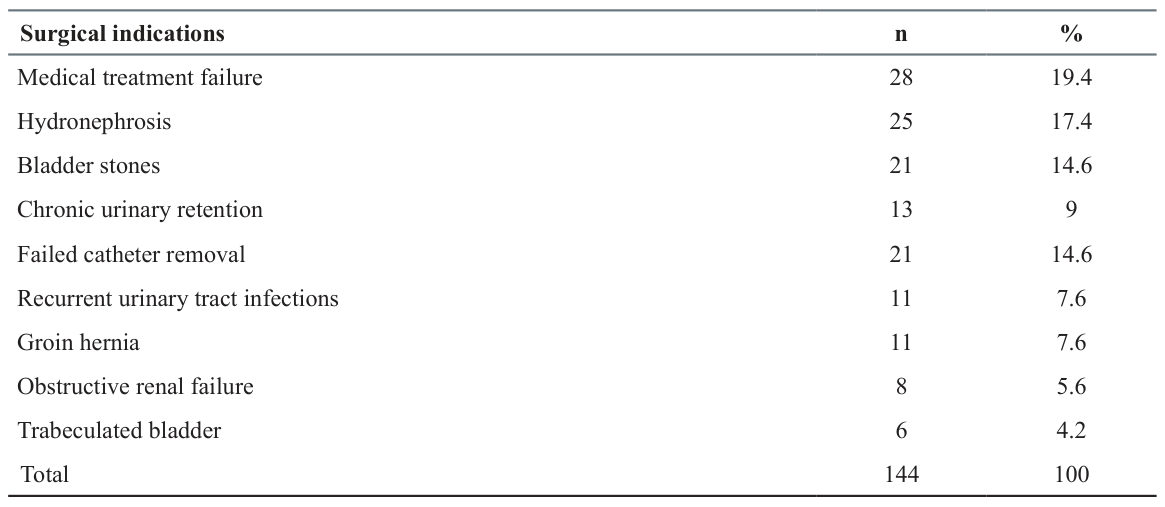

Figure 2: Distribution of postoperative complications
BPH accounted for 16.3% of urology consultations, similar to the 15.7% reported by Ondongo [1]. Mean age was 65.46 years, and patients aged 61–70 years predominated. Comparable mean ages were reported by Adakal, Ndiath, Diallo and Ondongo [1,3,5,6].
Hypertension and diabetes were present in 23.9% and 15.5%. Botcho [7] and Ondongo [1] reported higher proportions. Advanced age is itself associated with cardiovascular risk and reduced arterial elasticity.
Appendectomy and hernia repair were reported in 21% and 2.6%. Gnammi [8] reported hernia repair in 17.1%. Bladder outlet obstruction and straining may increase intra-abdominal pressure, while ageing weakens the abdominal wall; groin hernia may therefore coexist with complicated BPH.
Urinary retention and dysuria were the leading complaints (46.6% and 32.7%), consistent with Diallo [3] and other authors [5,9]. These findings suggest late presentation at the obstructive-complication stage.
E. coli was isolated in 30.4%, compared with 68.12% in Bah [10], 65.5% in Adakal [5] and 71.4% in Massandé [11]. Prolonged preoperative catheterization and frequent self-medication may influence urinary infection patterns.
Total PSA was normal in 51.5%, lower than the 92% reported by Bah [10]. Urinary infection, retention and large prostate volume may increase PSA. Histological examination confirmed BPH in all prostatectomy specimens; Kyei [12] reported a mean total PSA of 17.1 ng/mL.
Alpha-blockers were prescribed to 69.3% and were effective in 77.1%. Rabahi [13] reported a 75% firstline response, while Cornu [14] found a 5–6-point (30–40%) reduction in IPSS. Alpha-blockers relax smooth muscle in the prostate and bladder neck and are preferred when complications are absent.
All operated patients underwent transvesical prostatectomy using the Freyer–Hryntschak technique because the endoscopy system was not functional. Nyanga [15] reported open prostatectomy in 94.6% and transurethral resection in 5.4%. Diallo [3], Bah [10] and Bagayogo [9] also reported high open-surgery rates, reflecting limited equipment and maintenance capacity.
The principal indications were medical treatment failure, hydronephrosis and bladder stones. Bah [10] and Bagayogo [9] similarly reported complicated chronic retention. These patterns show that many patients present when surgery is required to relieve obstruction.
Wound infection occurred in 18.8% and vesicocutaneous fistula in 13.2%, comparable to the wound infection rates reported by Bah [10] and Ondongo [1]. Urinary infection and intermittent poor glycaemic control may contribute to infection after open surgery.
Mortality was 2.1%: two deaths followed thromboembolic events and one followed decompensated type 1 diabetes. Similar mortality was reported by Adakal [5], Bah [10], Ondongo [1] and Botcho [7].
Mean hospital stay was 8.6 days, close to the six days reported by Diallo [3] and Gnammi [8]. Complications prolong hospitalization, whereas transurethral resection permits shorter stays; Nyanga [15] reported 1.9 days.
BPH is common among older men and is treated medically and/or surgically. Wound infection and vesicocutaneous fistula were frequent after open surgery. Restoring access to urological endoscopy could reduce morbidity and shorten hospital stay.
*Correspondence :
MINGUEMADJI Allassiangar
mingue.allas@gmail.com
Available online : September 30, 2026
1 : Urology Department, National Referral University Hospital, N’Djamena, Chad 2 : Urology Department, Tengandogo University Hospital, Ouagadougou, Burkina Faso 3 : Urology Department, Renaissance University Hospital, N’Djamena, Chad © Journal of african clinical cases and reviews 2026
Conflict of interest : None
[1] Ondongo AA.M, Ondzieloas O A S, Dimi NY, Banga MRB, Okambas S, Service M et al. Prise en charge de l’hypertrophie bénigne de la prostate au Centre Hospitalier et Universitaire de Brazzaville. Uro’Andro.2020 ; 2(4) : 138-43.
[2] 2, Ousseynou K , Jalloum M , Mukeshimana A , Ngom Gueye NF , Gueye SM . Evaluation des connaissances de l’hypertrophie bénigne de la prostate chez les hommes sénégalais agés de 60 ans et plus au centre de gériatrie de Ouakam. Uro’Andro. 2020 ; 2(2) : 69 -74.
[3] Diallo M, Konaté M, Diakité IK, Konaké Koumaré S, Keita M, Samaké A et al. Adénome de la prostate dans le Centre de Santé de la Commune VI Bamako. Health Sci Dis.2020 ; 21(5) : 65 - 68.
[4] Zhong J, Feng Z, Peng Y, Liang H. A Systematic Review and Meta-analysis of Efficacy and Safety Following Holmium Laser Enucleation of Prostate and Transurethral Resection of Prostate for Benign Prostatic Hyperplasia. Urology. 2019;131:14‑20.
[5] Adakal O, Rouga M, Abdoulaye M, Adamou H, Maikassou M, Mounkeila I et al.Hypertrophie bénigne de la prostate au Centre Hospitalier Régional de Maradi.Haelth Sci Dis. 2021 ; 22(11) : 93-97.
[6] Abdoulaye Ndiath, Alioune Sarr, El Hadji Malick Diaw, Ousmane Sow, Modou Ndiaye, Babacar Sine et al. Morbi-mortalité de la résection transurétrale bipolaire de la prostate au Service d´Urologie-Andrologie de l´Hôpital Aristide Le Dantec de Dakar. PAMJ Clinical Medicine. 2021;5(75). 10.11604/pamjcm. 2021.5.75.27226.
[7] Botcho G, Kpatchaa TM, Tenguea K, Dossouvib T, Sewaa EV, K. Simlawoc K et al. Morbidité et mortalité après adénomectomies prostatiques par voie trans-vésicale au CHU Kara (Togo). African Journal of Urology. 11 septembre 2018 ; 24 : 353– 58.
[8] Gnammi L, Cissé D, Gamamou V, KantéD, Bah M, Akinocho E et al Comparative study of transvesical and retropubic prostatic Adenomectomic in the urology-Andrology.Open Journal of Urology.2024;14(4):227-243
[9] Bagayogo N, Faye PM, B Sine, Adiouma GRJS. Aspects épidémiologiques, cliniques et thérapeutiques de l’HBP géante. Journal Africain d’urologie.2021 ; 27:49-55.
[10] Bah I, Bah M,Baray M, Diallo A, Kante D, DialloT et al. Résultats et complications au service d’urologie et andrologie de l’hôpital Ignace Deen. Health Sci Dis. 2020 ;21(9) :55-59
[11] Massandé Mouyendi J, Mougougou A, Ndang ngou Milama S, Adandé Menest E. Morbilité et mortalité apres adenomectomie prostatique transvesicale au Centre Hospitalier Universitaire de Libreville. A propos de 68 cas. Juillet 2017 ; 1 (8) :362-66.
[12] Kyei M,MensahJ, MortonB,Gepi- AtteeS,KlufioG,YeboahE. Sugical Management of BPH in Ghana:A Needto Improve Accessto Transurethral Resection of the Prostate. East African Medical Journal. 2013; 89: 241-5.
[13] Rabahi F, Meklat F,Rezkallah S, Amar A, Touati M, Mebrek M et al. Les nouvelles thérapies minimalement invasives dans le traitement de l’hypertrophie bénigne de la prostate. Alg J Med.2023 ; 2 :77-79
[14] Cornu JN, Cussenot O, Haab F, Lukacs B. A widespread population study of actual medical management of lower urinary tract symptoms related to benign prostatic hyperplasia across Europe and beyond official clinical guidelines. Eur Urol. 2010; 58(3):450-6
[15] Nyanga Y, Ondziel, Ondze O, Banga M, Ondongo A, Onguele O et al. La chirurgie endoscopique de la prostate au CHU de Brazzaville. Health SciDi. 2024 ; 25(3): 80-82.
To cite this article
A Minguemadji, O Nisso, RK Freddy, B Ouedraogo, A-S Ndormadjita, A Ahmat Mahamat et al. Clinical Profile and Management of Benign Prostatic Hyperplasia at the National Referral University Hospital of N’Djamena. Jaccr Surgery 2026; 2(3): 55-60
